
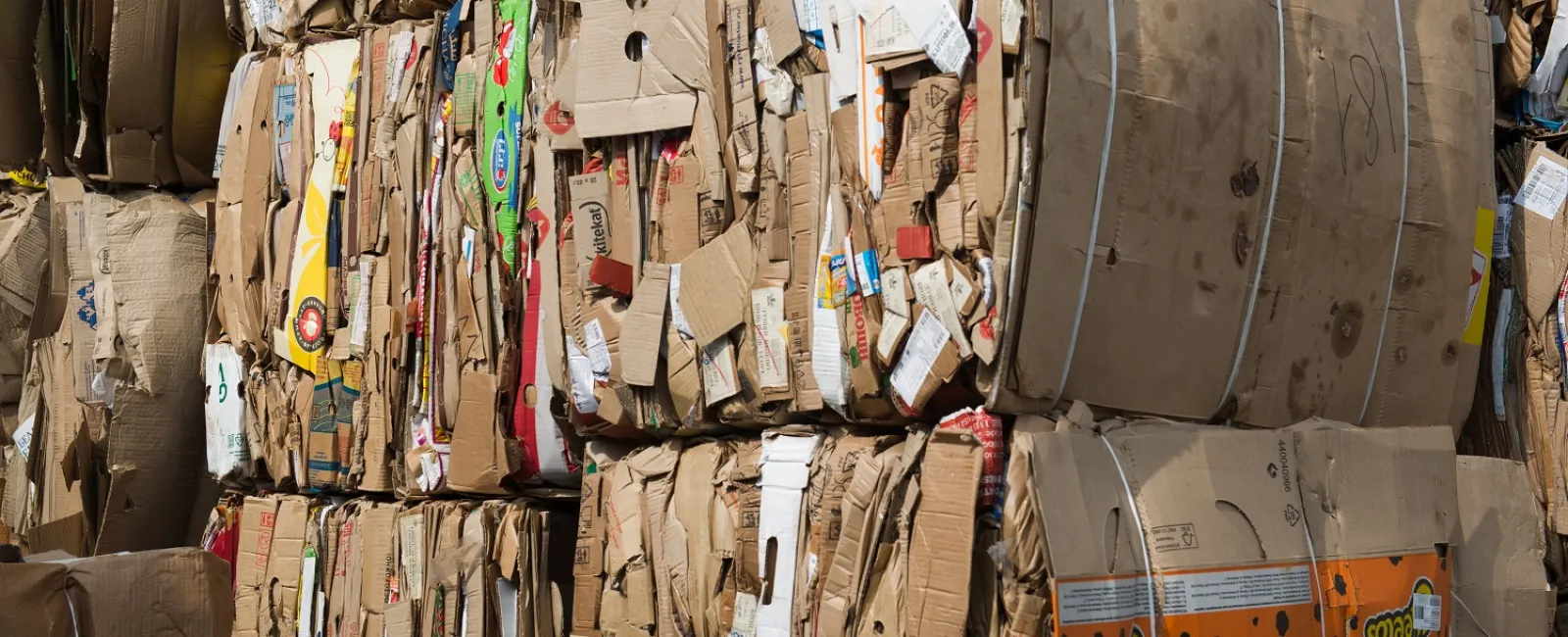
What Is OCC?
OCC stands for Old Corrugated Cardboard, or Old Corrugated Containers, depending on who you ask. The terms are used interchangeably in the waste and recycling industry. It refers to used corrugated boxes and packaging, the kind with a wavy fluted layer sandwiched between two flat linerboards.
You know it as a shipping box. Paper mills and recyclers know it as a high-demand fiber commodity.
Unlike mixed paper or chipboard, corrugated cardboard holds strong, reusable fibers that can be broken down and reformed into new containerboard. That is what makes OCC paper one of the most consistently sought-after materials in the recycled fiber market. If you want to understand how that fiber feeds into broader industrial recycling benefits for your operation, it starts here.
Why OCC Has Real Market Value
OCC is not just recyclable. It is sellable. Paper mills buy it to produce new corrugated products, and demand is driven by global packaging consumption. When markets are strong, facilities generating clean, well-baled OCC can receive rebates from their recycling hauler instead of paying disposal fees.
The keyword there is clean. Market pricing for OCC fluctuates based on fiber quality, and contaminated or wet cardboard gets downgraded or rejected outright. The difference between a rebate and a landfill bill often comes down to how well you manage your OCC before it leaves your facility.
What Contaminates OCC and Reduces Its Value
Not all cardboard holds the same value at a paper mill. Recyclers grade OCC strictly, and certain materials will reduce the value of your load or cause it to be rejected entirely.
Common contaminants that hurt OCC value include:
- Wax-coated or plastic-lined cardboard
- Excessive packing tape or plastic strapping
- Wet or moisture-damaged cardboard
- Food residue or grease
- Foam, plastic wrap, or other non-paper materials left inside boxes
- Boxboard, such as cereal boxes or paperboard, mixed in with corrugated
Removing these before baling is one of the simplest ways to protect the value of your OCC.
The Role of OCC Bales in Your Recycling Program
Loose cardboard takes up significant space and is expensive to transport. Recycling facilities and paper mills want OCC bales because they are dense, uniform, and easy to process. A well-formed bale of OCC typically weighs between 1,000 and 1,500 pounds, depending on the baler used. That density directly affects how much you can recover per load.
Facilities that bale their OCC rather than loosely bin it see two immediate benefits. First, they reduce the number of hauls required, which lowers transportation costs. Second, baled OCC commands better pricing because it signals to the buyer that the material has been handled consistently and is likely cleaner.
For any operation generating more than a few tons of cardboard per week, a baler is not optional equipment. It is the foundation of a functioning OCC program. If you are new to the subject, our blog on how a baler works is a good place to start.
How Much OCC Does Your Operation Generate?
Volume determines everything about how you should handle OCC. A small retail location might accumulate a few hundred pounds per week and manage fine with a vertical baler and periodic pickups. A distribution center or manufacturing plant could generate several tons per shift and needs a high-throughput horizontal baler with conveyor infeed to keep up.
Here is a general guide based on volume:
| Daily OCC Volume | Recommended Equipment |
|---|---|
| Under 500 lbs | Manual breakdown, cart collection |
| 500 lbs to 1 ton | Vertical baler |
| 1 to 4 tons | Closed-door horizontal baler |
| 4+ tons | Auto-tie horizontal baler with conveyor |
Not sure which type fits your operation? Our breakdown of different types of recycling balers walks through the options in detail, and our comparison of the auto-tie baler vs. closed door baler digs into the two most common horizontal configurations side by side.
Keeping OCC Dry Is Not Optional
Moisture is one of the fastest ways to destroy the value of your OCC. Wet cardboard loses structural integrity, which weakens the fiber. Paper mills pay for fiber quality, and degraded fiber means a lower-grade load or a rejected shipment.
Store your cardboard indoors where possible. If bales are stored outside, the outer layer will get wet, but the inner material generally stays dry. Loose, unbaled cardboard stored outside will absorb moisture throughout and may be rejected. This is another practical argument for baling your OCC before storage rather than after, and for keeping your equipment in reliable working condition through regular preventive maintenance.
OCC Grades: Not All Cardboard Is the Same
The recycling industry uses grading standards to classify OCC. The two most common grades relevant to industrial generators are:
Grade 11 (OCC): Standard corrugated containers with kraft, jute, or test liners. This is the most common grade for most commercial and industrial operations, including printing and box shops and general manufacturing.
Grade 12 (DS OCC or Double-Sorted OCC): A higher-grade classification, typically generated by supermarkets and large commercial facilities. This material is sorted more carefully, free of boxboard and offshore corrugated, and commands a premium price.
Knowing which grade your facility generates helps you communicate accurately with your recycler and ensures you are being paid appropriately for your material.
How Equipment Affects OCC Recycling Revenue
The right equipment does not just make handling easier. It directly affects how much money you make from your OCC.
A baler that produces dense, consistently tied bales gives you negotiating leverage with your recycler. Bales that fall apart, contain loose material, or vary in weight make it harder to get premium pricing. Horizontal balers generally produce denser bales than vertical balers, which is why high-volume operations consistently get better OCC rebates when they upgrade.
Conveyor systems also matter. Hand-feeding a baler slows throughput and increases labor costs. Facilities that integrate conveyors into their OCC handling process keep material moving efficiently and reduce the time employees spend managing cardboard manually. For operations that want a fully engineered solution, a custom waste handling system design can tie balers, conveyors, and compactors together into a single streamlined workflow.
For facilities running older automation, a PLC upgrade can restore control precision and improve the consistency of every bale your system produces, which pays dividends in OCC quality and revenue over time.
What to Look for When Building an OCC Program
Whether you are setting up an OCC program for the first time or trying to improve an existing one, these are the factors that drive results:
- Consistent separation of OCC from other waste streams
- Dry, indoor storage before baling
- Removal of contaminants before material enters the baler
- Equipment matched to your actual volume
- A reliable hauler or mill buyer who grades your material fairly
- Regular maintenance on your baler to keep bale weight and density consistent
Work with Crigler Enterprises to Build a Better OCC Program
For over 50 years, Crigler Enterprises has helped businesses across the Southeast set up and optimize their recycling equipment to get the most value from materials like OCC. Whether you need a vertical baler for a single-location retail store or a full horizontal baling system with conveyor infeed for a distribution center, our team can help you find equipment that fits your volume and your budget.
We carry new and used balers, conveyors, and compactors from leading manufacturers and provide system design, installation, and ongoing service support.
Contact Crigler Enterprises today to talk through your OCC handling setup and find equipment that works as hard as your operation does.


