
Choosing an industrial shredder
is a material problem before it is an equipment problem. A machine that turns a
pallet of office paper into confetti will choke on a skid of copper wire. A
unit built for scrap metal will burn through blades if you keep feeding it
contaminated plastic. Before you compare brands or request quotes, the question
that matters is straightforward: what are you putting into the machine, and
what do you need to come out the other side?
Start With the Material, Not the Machine
Before you contact
a supplier, answer four questions about what you are processing:
- What is the material? Paper, cardboard, plastic, wood, metal, tires, e-waste, textiles, or a mixed stream. This drives every downstream decision, from cutter geometry to horsepower to blade metallurgy.
- What is the largest piece you feed in? Feed opening and hopper size must match your largest input, not your average input.
- What output size do you need? A cardboard recycler wants strips. A plastics processor feeding a granulator needs a uniform 40 to 60 mm particle. Secure destruction requires pieces small enough to make the content unreadable.
- What throughput do you need, per hour and per day? Undersizing a shredder reduces margins. Oversizing wastes capital and floor space.
Document these four answers
before you shop. They form the specification sheet you will provide to every
vendor.
The Main Types of Industrial Shredders
Single-Shaft Shredders
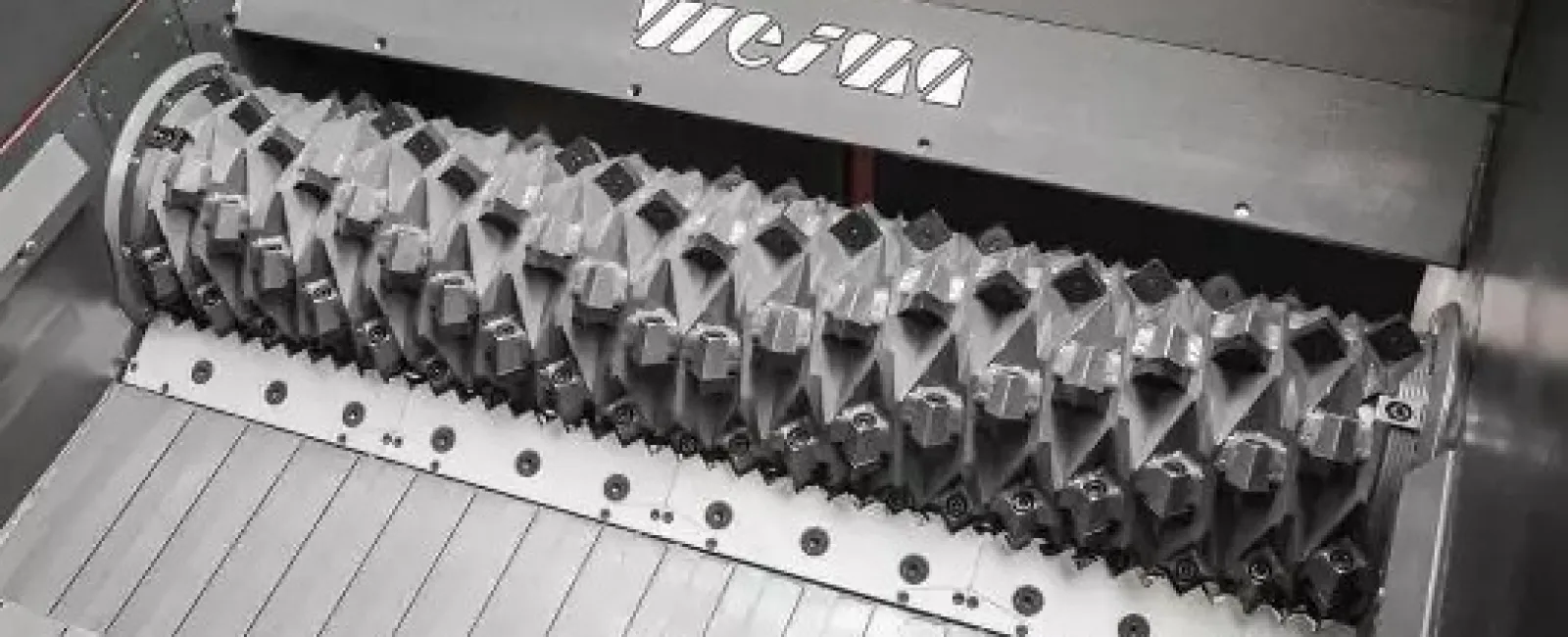
A single-shaft shredder uses one
rotor fitted with cutting knives, working against a stationary bed knife and a
screen that controls output size. Material remains in the chamber until it
passes through the screen, which produces consistent, sized output.
Single-shaft machines are the
correct choice when uniform particle size is required for a downstream process.
They are common in plastics recycling, wood waste applications, and any
operation where shredded output feeds a granulator, extruder, or pelletizer.
Bulky or stringy material can wrap the rotor, and hard metallic contamination
will chip knives.
Dual-Shaft Shredders
Dual-shaft shredders use two
counter-rotating shafts with intermeshing cutters that shear and tear material
through the chamber. They operate at low speed and high torque, which is the
configuration required for tough, bulky, or unpredictable feedstock.
This is the workhorse category
for mixed industrial waste, wooden pallets, scrap tires, plastic drums,
cardboard bales, e-waste, and light metal. Dual-shaft machines accommodate
irregular shapes and tolerate tramp metal more effectively than single-shaft
designs. Output is typically an irregular strip or chip, so if uniform particle
size is critical, pair a dual-shaft unit with a secondary shredder or
granulator.
Quad-Shaft Shredders
Quad-shaft machines add a second
set of cutters above a screen, combining the aggressive intake of two-shaft
shredding with the particle consistency of a screened single-shaft. They are
common in secure destruction, e-waste processing, and any application that
requires both tough input handling and a guaranteed maximum output size.
Hammer Mills and Granulators
Hammer mills are suited to
brittle, dense feedstock such as glass, ceramics, light metals, and mineral
waste. Granulators produce small, uniform regrind under 10 mm and perform best
as a second stage after a shredder when finished material is required for
extrusion or injection molding.
Matching the Machine to the Material
|
Material |
Best Fit |
Avoid |
|
Office paper, documents |
Industrial paper shredder |
Hammer mill |
|
Cardboard and corrugated |
Corrugated shredder or
dual-shaft |
Granulator |
|
Clean plastic (HDPE, PP, PET) |
Single-shaft shredder |
Hammer mill |
|
Mixed or contaminated plastic |
Dual-shaft shredder |
Granulator as primary |
|
Wood, pallets, bulky waste |
Dual-shaft shredder |
Paper shredder |
|
Light scrap metal, cans, drums |
Dual-shaft or quad-shaft |
Standard single-shaft |
|
E-waste and hard drives |
Quad-shaft or hardened
single-shaft |
Paper shredder |
|
Tires |
Dual-shaft (purpose-built) |
Single-shaft, hammer mill |
Real feedstock is messier than
any chart suggests, and the final selection should come from a vendor that has
tested your actual material on the equipment under consideration.
The Specifications That Actually Matter
Motor power attracts attention,
but torque is what breaks down tough material without stalling. For anything
heavier than paper or clean plastic, torque is the more important figure.
Chamber size determines what you
can physically introduce to the machine. Measure your largest feed item and add
a generous margin. On single-shaft and quad-shaft machines, the screen controls
output size. Smaller openings produce finer output but lower throughput. For
most ferrous scrap, 80 to 120 mm openings provide a workable balance.
Blade life is one of the largest
hidden costs in any shredder operation. Clean plastic runs well on D2 tool
steel. Contaminated or shock-loaded streams require something tougher. Abrasive
feedstock calls for hardfacing or tungsten carbide inserts. Confirm blade
grade, heat treatment, and resharpening cycles before signing a purchase order.
Electric drives are quieter and
less expensive to maintain. Hydraulic drives deliver consistent torque under
shock loading and are standard on mobile and heavy scrap machines. Match the
drive to the duty cycle, not the quote.
Throughput and Site Fit
Size a shredder for the peak,
not the average. A line that averages five tons per day but absorbs a two-ton
surge in a single hour requires a machine rated for that surge. A shredder
rated for intermittent service will not survive a continuous eight-hour shift.
Before purchase, confirm footprint, ceiling height, power supply, dust and fire protection, material handling, and noise mitigation. A capable supplier will walk your facility before quoting and engineer the shredder into the surrounding system rather than dropping a machine on the floor and leaving you to integrate it.
Get the Right Shredder the First Time
The right industrial shredder
pays for itself through higher throughput, lower labor cost, cleaner output,
and longer equipment life across the entire line. The wrong one creates jams,
accelerates blade wear, and becomes the problem that slows every downstream
process.
Start with your material. Select
the shredder category that matches it. Then narrow your decision based on
specifications, site fit, and the support behind the equipment. If you would
like a second opinion on your material stream before you commit, contact a
distributor that installs and services this equipment every day.


