
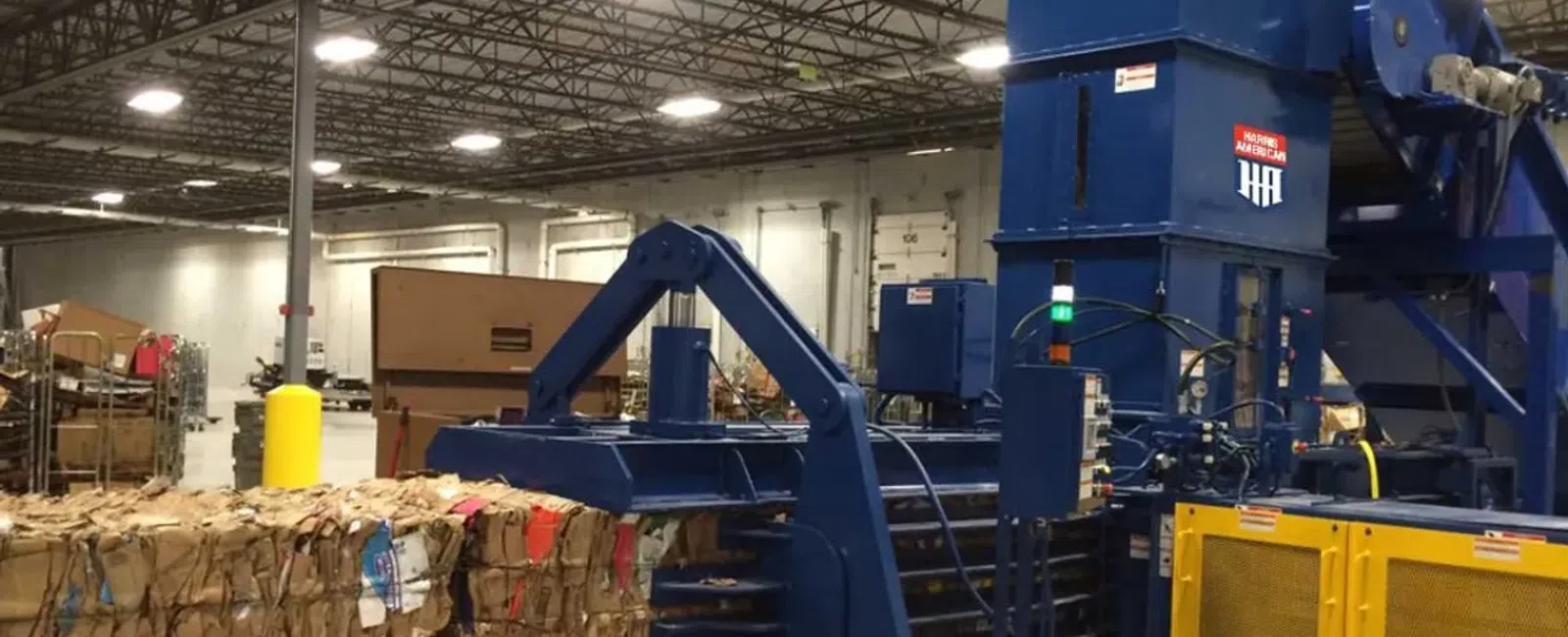
A cardboard
baler compresses loose boxes and corrugated sheets into dense, tied bales that
are easy to store, load, and sell to a recycler. The right machine depends on
how much cardboard you generate, how it reaches the machine, and how much floor
space you have. Vertical balers suit smaller back-of-house operations, while
horizontal balers suit facilities that move cardboard all day. This guide
explains the differences, what drives the price, and how to narrow your choice
before you request a quote.
What a Cardboard Baler Does
A baler uses a hydraulic ram to press cardboard into a compact block, then wire or strapping holds the shape so the bale can be moved with a pallet jack or forklift. Compressing loose material shrinks the space it takes up, cuts the number of pickups you need, and turns a disposal cost into a material you can sell. Old corrugated containers, often called OCC, are one of the most commonly baled materials.
Vertical Cardboard Balers
A vertical
cardboard baler loads from the front, compresses from the top down, and
produces a bale that the operator ties off by hand and removes. These machines
have a small footprint and fit in a back room, a loading dock corner or a store
stockroom.
Where vertical balers fit best
Vertical balers
work well for retail stores, restaurants, small warehouses, print and box
shops, and any site that produces a steady but moderate amount of cardboard.
They are loaded by hand, so they depend on someone being available to feed, tie, and eject bales.
Limits to plan for
Because loading and tying are manual, a vertical baler becomes a bottleneck when cardboard arrives faster than one person can process it. Bale size is also limited by the chamber. Facilities with a large and constant flow usually outgrow a vertical machine.
Horizontal Cardboard Balers
A horizontal
cardboard baler pushes material sideways into a chamber and is built for
steady, high-volume production. Cardboard can be fed by hand, through a hopper,
or by conveyor, and many horizontal machines tie bales automatically.
Where horizontal balers fit best
Distribution
centers, grocery operations, paper converters and manufacturers tend to choose
horizontal balers because the machine can run through a shift with little
handling. A conveyor feed lets cardboard move from the work area straight into
the baler, which reduces labor and keeps aisles clear.
Limits to plan for
Horizontal
balers need more floor space, more power and a more involved installation than
vertical machines. They are a larger purchase and are usually matched to a
long-term volume plan.
Auto-Tie vs. Manual-Tie Balers
An auto-tie
baler wraps and secures each bale with wire without an operator handling it,
while a manual-tie baler requires someone to thread and twist the wire.
Auto-tie machines save labor and increase throughput, which is why they are
common on horizontal balers. Manual-tie machines have a lower equipment cost
and suit lower volumes.
How to Size a Cardboard Baler
Sizing starts
with how much cardboard you actually produce and how it moves through your
building. Before you compare models, gather these answers:
- Your approximate cardboard volume per week or per month, and whether it spikes in certain seasons
- The size and type of boxes you handle, including oversized or heavy-duty corrugated
- How material reaches the baler: loaded by hand, dumped from a cart, or delivered by conveyor
- The floor space and ceiling height available, and the path a forklift or pallet jack will use to remove bales
- The electrical service available at the install location
- Who will operate and maintain the machine
What Drives Cardboard Baler Cost
Cardboard baler
cost depends on the machine type, its size and capacity, the tie system, the
controls, and whether you buy new or used. Instead of a single number, it helps
to understand the factors that move the price.
Machine type and capacity
Vertical balers
generally cost less than horizontal balers because they are smaller and
simpler. Within each type, larger chambers, more press force and higher
throughput add to the price.
Tie system and feed method
Auto-tie
systems, conveyor feeds and hoppers raise the equipment cost but reduce ongoing
labor. Weigh that trade against how many hours the machine will run.
Controls and automation
Modern balers
use a programmable logic controller for sequencing, safety interlocks and
diagnostics.
Installation and site work
Electrical
work, anchoring, conveyor integration and removing an old machine all add to
the total project. Ask for these items to be listed separately so quotes can be
compared fairly.
Ongoing costs
Wire or
strapping, preventive maintenance and service calls belong in the total cost of
ownership. A well-maintained machine lasts longer, and our preventive
maintenance checklist for industrial balers shows what to schedule.
Many buyers also compare the baler against what they pay for hauling and dumpster service today. Our tips for reducing commercial waste management cost covers where those savings tend to appear. A direct quote is the only reliable way to see numbers for your site, so contact Crigler with your volume and layout.
Baler or Compactor
A baler produces tied, sellable bales of cardboard, while a compactor compresses mixed waste into a container that is hauled away. If your goal is to capture the value of clean cardboard, a baler is usually the better fit. If you need to manage general trash, a compactor may be what you want.
Frequently Asked Questions
What is the best cardboard baler for a small business?
A vertical
baler is usually the best fit for a small business because it has a small
footprint, a lower equipment cost than horizontal machines, and straightforward
operation. The right model depends on your weekly cardboard volume and
available space.
How much does a cardboard baler cost?
The price
depends on whether the baler is vertical or horizontal, its capacity, the tie
system, the controls and whether it is new or used. Installation and site work
add to the total. Contact Crigler with your volume and layout for a quote based
on your site.
Are horizontal or vertical cardboard balers better?
Neither is
better in every case. Vertical balers suit lower volumes and tight spaces,
while horizontal balers suit high volumes and continuous feeding, often with
conveyors and auto-tie.
Is a used cardboard baler worth buying?
A used baler
can be a good value when it has been inspected and refurbished properly. Ask
what was replaced, how the controls were tested, and whether service is
available after the sale.
What does an auto-tie baler do?
An auto-tie
baler secures each finished bale with wire automatically, so an operator does
not have to thread and twist the wire by hand. This saves labor and increases
throughput on high-volume lines.
Can a cardboard baler handle other materials?
Many balers can
also process materials such as plastic film or paper, but capability depends on
the machine. Confirm the materials you plan to bale before you buy.
Talk to a Baler Specialist
Crigler Enterprises has supplied and serviced recycling equipment since 1972 and can help you match a cardboard baler to your volume, layout and budget. Browse our balers, or call 404-874-4401 or use the contact form to request a quote.


