Single stream recycling puts paper, cardboard, plastic, metal, and often glass into one bin and one truck. The sorting that residents and businesses used to do at the curb moves to a material recovery facility, or MRF, where a line of screens, magnets, sensors, and people separates the mix into commodities that mills and manufacturers will buy. How much of that material actually gets recycled depends almost entirely on how well the line is designed and how clean the incoming loads are.
We design and install MRF equipment and sort lines, including conveyors, platforms, OCC screens, and balers, for recycling operations across the Southeast. The sequence below is how a typical single stream MRF works, and where each stage tends to struggle.
Single Stream vs. Multi Stream Recycling
In a multi stream or dual stream program, households and businesses separate their recyclables before pickup, usually paper in one container and bottles and cans in another. Collection takes more effort and often more trucks, but the material arrives cleaner, especially the paper. Single stream trades that sorting at the curb for convenience. Participation usually goes up, collection is simpler, and the work of separating everything shifts to the MRF.
That shift is the reason single stream depends so heavily on processing equipment. Glass that breaks in the truck ends up embedded in paper, and food residue spreads across everything in the load. A multi stream program avoids most of that by keeping fiber away from containers in the first place.
How a MRF Sorts a Single Stream Load
Tipping Floor and Infeed
Collection trucks dump their loads on the tipping floor, and a loader pushes material onto an infeed conveyor. Metering equipment spreads the material into an even layer, because every screen and sensor downstream works better when it sees a steady flow instead of surges.
Presort
Workers on a sort platform pull out anything that would damage equipment or contaminate the line: plastic bags and film, garden hoses, extension cords, large rigid items, and hazards like propane tanks and batteries. Bags and anything long and flexible are the biggest concern here, because they wrap around the shafts of the disc screens that come next.
OCC Screen
An OCC screen is an angled bed of rotating discs. Large pieces of cardboard ride across the top and off the end, while smaller items fall through the gaps. Cardboard is usually the most valuable fiber in the load, so pulling it out early and cleanly matters. Our post on what OCC paper is explains why mills pay more for clean cardboard.
Paper Screens
Additional disc screens separate flat material like newspaper and office paper from round containers. Paper rides up and over the discs, while bottles and cans roll back or fall through. These screens produce the mixed paper and newsprint grades, and they are where glass shards and leftover plastic most often end up contaminating fiber.
Glass Breaker
Many single stream MRFs run material across a breaker screen that crushes glass into small pieces and drops it through a fines screen. Removing glass early protects downstream equipment from wear and keeps it out of paper bales.
Magnets and Eddy Current Separators
Overhead or drum magnets lift steel and tin cans out of the container stream. An eddy current separator then uses a rotating magnetic field to throw aluminum cans away from the rest of the material and into their own chute. Aluminum is often the most valuable commodity per ton in the load.
Optical Sorting and Quality Control
Optical sorters use sensors to identify specific plastics, like PET bottles and HDPE jugs, and fire short bursts of air to push each item into the right chute. Our post on how optical sorting systems work covers that technology in more detail. Manual sorters at the end of the line catch what the machines miss before each commodity moves on.
Baling
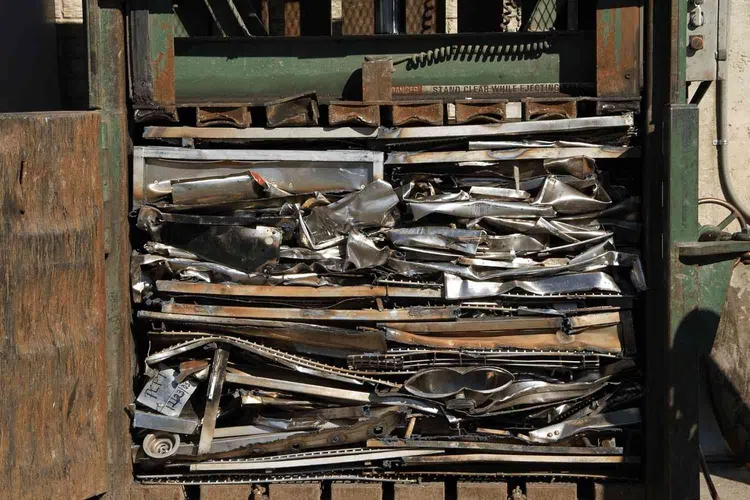
Each finished commodity is baled for shipment to mills and manufacturers. A MRF may run one baler for several materials or dedicated balers for its largest streams, usually fed by conveyor straight from the sort line. Bale density and cleanliness decide what the MRF gets paid, so the baler matters as much as any screen on the line.
| Stage | What It Pulls Out | Equipment Involved |
|---|---|---|
| Tipping floor and infeed | Nothing yet; sets an even flow | Loader, infeed conveyor, metering equipment |
| Presort | Bags, film, hoses, cords, large items, hazards | Sort platform and manual sorters |
| OCC screen | Large cardboard | Angled disc screen |
| Paper screens | Newspaper and mixed paper | Disc screens that separate flat items from round ones |
| Glass breaker | Glass, broken into small pieces | Breaker screen and fines screen |
| Magnet | Steel and tin cans | Overhead or drum magnet |
| Eddy current separator | Aluminum cans | Rotating magnetic field that repels aluminum |
| Optical sorting and quality control | Specific plastics and leftover contaminants | Optical sorters with air jets, plus manual sorters |
| Baling | Finished commodities | Balers, usually fed by conveyor |
Does Single Stream Recycling Actually Get Recycled?
Most of it does, when the incoming material is clean and the line is built for it. What does not get recycled is the residue: the contamination and unsorted material that leaves the MRF for landfill. Plastic bags, food waste, and items that do not belong in the program drive that number up, slow the line, and lower the value of the bales that do ship. Our post on how recycling contamination affects processing covers those effects.
Line design matters just as much. A MRF built for a lighter, cleaner stream struggles when tonnage grows or the material mix changes. Screens that are undersized, presort stations that are understaffed, and balers that cannot keep up all push recyclable material into the residue pile.
What Single Stream Means for Haulers, MRFs, and Municipalities
For haulers and municipalities, single stream simplifies collection and usually raises participation. For the MRF, it raises the bar on processing. Facilities that handle single stream need enough presort capacity, screens matched to their volume, and balers that keep pace with the line, plus a maintenance program that keeps screens and conveyors running. Crigler works with waste management and recycling operations on all of those pieces.
When a facility is expanding or rebuilding, the line needs to be planned as a whole. Adding a screen without increasing conveyor capacity, or upgrading sorting without a larger baler, just moves the bottleneck. Our system design and installation team lays out the full line around the material stream, and our repair and maintenance technicians keep it running after startup.
Frequently Asked Questions
What is meant by single stream recycling?
Single stream recycling means all accepted recyclables go into one container for collection. Paper, cardboard, plastic, metal, and sometimes glass are collected together and sorted later at a material recovery facility.
What can you put in single stream recycling?
Most programs accept cardboard, paper, plastic bottles and jugs, and aluminum and steel cans, and many accept glass. The exact list varies by program, so check with your local hauler or municipality. Plastic bags and film almost never belong in a single stream bin.
Is single stream better than multi stream recycling?
Each has tradeoffs. Single stream is easier for participants and usually collects more material, while multi stream produces cleaner material, especially paper. The better choice depends on collection costs, local markets, and the processing equipment available.
Why do plastic bags cause problems at a MRF?
Plastic bags and film wrap around the rotating shafts of disc screens. When enough builds up, the screens stop separating material properly and the line has to be shut down so workers can cut the film free.
What equipment does a single stream MRF need?
A typical single stream MRF uses infeed conveyors, presort platforms, OCC and paper screens, a glass breaker, magnets, an eddy current separator, optical sorters, and balers. The exact mix depends on tonnage and material. Our custom waste handling systems page outlines the equipment we design and install.
Build a Sort Line That Keeps Up
At Crigler Enterprises, we have designed, installed, and serviced recycling equipment since 1972, and we run the largest recycling equipment service fleet in the Southeast. We help material recovery facilities, haulers, and municipalities plan sort lines, OCC screens, conveyors, and balers that match the material coming across their tipping floor.
Call 404-874-4401 or reach our team through the contact page.