
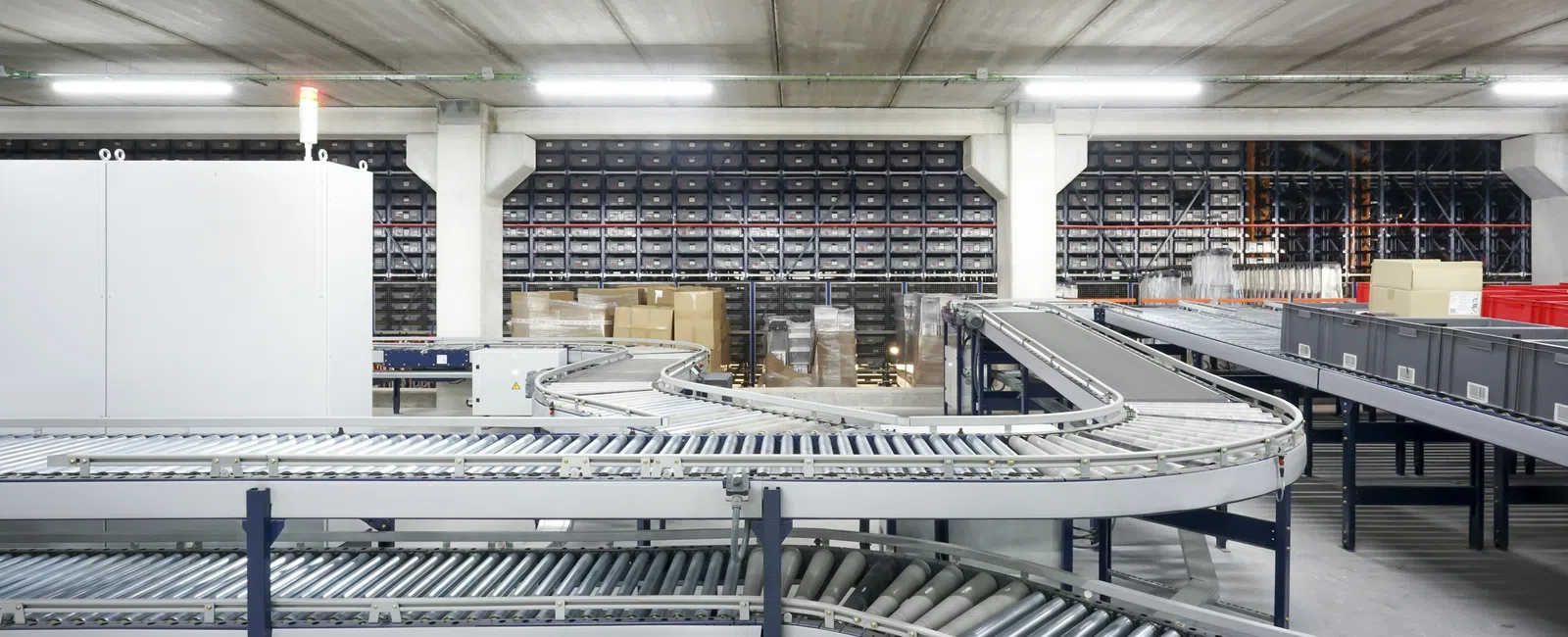
A conveyor almost never arrives as one finished machine that gets set down and switched on. It arrives as frame sections, a drive assembly, controls, and guarding that all have to be fitted into a building that was probably laid out before anyone thought about where a conveyor would go. Facility managers who haven't sat through the process before are often surprised by how much of the schedule depends on decisions made weeks earlier, and by how much preparation belongs to the plant rather than the crew doing the work.
What A Conveyor Installation Actually Covers
The scope is wider than setting a frame on the floor. A typical project includes mechanical setting and support of the conveyor sections, structural anchoring, electrical tie-in, controls integration with the equipment on either end, guarding, and a commissioning period before the line runs in production.
The complexity depends heavily on whether the conveyor is a standalone unit or part of a line. Replacing a single feed conveyor is largely a mechanical job. Adding an incline conveyor that feeds a horizontal baler means the two machines have to talk to each other, because the conveyor has to stop when the baler chamber is full and restart when it clears. Knowing the parts of an industrial conveyor makes those conversations with an installer far more productive, since drive location, take-up style, and belt type all shape what the installation requires.
Site Conditions Your Facility Should Confirm First
Most schedule slips happen here, before any equipment moves. The plant is usually the only party that can answer these questions, and answering them late can push a two-day job into a two-week one.
- Slab condition and floor flatness where the conveyor legs and supports will land, including any patched or sloped areas near drains.
- Pit dimensions and drainage if the conveyor sits below grade or feeds from a below-floor hopper.
- Clear height under sprinkler lines, light fixtures, ductwork, and existing overhead conveyor runs.
- Column locations and aisle widths that constrain where the frame can be routed.
- Transfer heights at both ends, measured to the actual infeed and discharge points of the machines already in place.
- The operating environment, including dust loading, moisture, washdown, and temperature swings near dock doors.
Belt type matters here more than most buyers expect. The hinged steel belt units Crigler distributes, including the Hustler Piano Hinge and the Endura Piano Hinged Steel Belt, carry heavy and sharp material and place different demands on floor support than a fabric or rubber belt system does. Compare the conveyor systems built for recycling against the material being moved before finalizing the layout, not after.
Power, Controls, And Electrical Coordination
Electrical work is the item most often caught late. The plant needs to confirm available voltage and phase, panel capacity, and where a drop can realistically land. Motor horsepower on the new unit determines conductor sizing and overcurrent protection, and those figures come from the equipment submittal, not an estimate.
Disconnect placement carries a code requirement that directly affects layout. NEC 430.102(A) requires an individual disconnecting means for each motor controller, located in sight of the controller. NEC 430.102(B) calls for a disconnecting means in sight from the motor and the driven machinery. Article 100 defines "in sight from" as visible and not more than 50 feet away. On a long conveyor run tucked behind other equipment, that single definition can decide where the drive end has to sit.
Controls integration is the other half. Interlocks between the conveyor and the machine it feeds, emergency stop circuits that span both machines, jam detection, and any speed control all have to be programmed and tested. Older equipment frequently needs a controls refresh before it can talk to anything new, which is why PLC upgrades on existing equipment are often scoped alongside a conveyor project rather than treated as a separate job later.
Rigging Access And Moving Equipment Into Position
Getting the conveyor from the truck to its final position is a planning exercise in its own right. Door width and height, turning radius in the aisles, and floor loading limits for a lift or crane all need to be checked against the largest single section being delivered. Long conveyors ship in sections for this reason, and refurbished units often arrive in more pieces than new ones.
Overhead obstructions determine whether sections can be assembled on the floor and lifted into place or must be built in position, which is slower. The plant also needs to decide who supplies lift equipment and spotters, and whether the work happens during production, between shifts, or over a shutdown. Sequencing around production is usually the single largest cost driver that has nothing to do with the equipment itself.
When a used or rebuilt unit is going in, we assess its condition before it ships. Understanding what equipment refurbishment includes helps a buyer judge whether the shop addressed bearings, chain, drive components, and structural members or whether they'll need attention in the field.
Alignment Tolerances And Field Documentation
Once the frame is in position, the work shifts to alignment, which determines whether the conveyor runs quietly for a decade or chews through components. The Conveyor Equipment Manufacturers Association publishes installation standards that set out the tolerances a millwright works to.
Those standards address the structure's straightness and squareness, leveling, pulley and shaft alignment, reducer and motor base setting, coupling alignment in angular, parallel, and axial terms, and idler and belt alignment. For example, the standards allow a maximum tolerance of plus or minus one eighth of an inch on the back-to-back dimension in channel frames or angle stringers. They also separate the requirements for fabricated structural bases, concrete supports, and structural steel supports, because each carries load differently.
The standards call for millwrights performing the work to document mechanical tolerances and benchmarks. That documentation is worth asking for. It gives the maintenance team a baseline to measure against years later when a belt starts wandering, or a bearing starts running hot, and it separates an installation problem from a wear problem.
Guarding, Crossovers, And Startup Safety
Guarding is part of the installation, not an afterthought once the line is running. OSHA 1910.219(d)(1) requires pulleys with any part seven feet or less from the floor or working platform to be guarded. Under 1910.219(e)(1)(i), where both runs of a horizontal belt sit seven feet or less from the floor, the guard extends at least fifteen inches above the belt.
OSHA 1926.555 adds requirements that shape the physical layout. Guards are required where a conveyor passes over work areas, aisles, or thoroughfares. An audible warning is required before startup. The emergency stop must not permit restart until the actuating stop switch has been reset to the running position. Provide and mark crossovers so nobody climbs over a moving belt. These items are far cheaper to build into the original layout than to retrofit, and you should settle your facility's conveyor guarding needs during design review. This is also the right time to update lockout and tagout procedures, so they reflect the new energy isolation points.
Commissioning, Run-In, And Operator Handoff
A conveyor is not finished when it turns. Commissioning starts with an empty run to confirm tracking, direction, amp draw, and interlock behavior, followed by a loaded run at the material and rate the line will actually see. CEMA installation standards treat run-in under empty and loaded conditions as distinct steps for good reason, since a belt that tracks correctly empty can wander badly under an off-center load.
Transfer points get the closest attention during this stage, because that is where spillage, jams, and premature wear show up first. Once behavior is stable, the handoff to operators covers startup and shutdown sequence, what the interlocks do and why the machine stops when it does, daily and weekly checks, and the spare parts worth stocking. Setting expectations for ongoing conveyor system maintenance at handoff, while the crew is still on site, produces better results than a maintenance conversation six months later.
Questions To Ask Conveyor Installation Companies
Buyers comparing conveyor installation companies are often looking at quotes that appear similar but describe very different scopes. A few questions separate them quickly.
- Does the same company install the equipment and service it afterward, or does responsibility change hands at commissioning?
- Is controls integration performed in-house or subcontracted, and who owns the interlock programming?
- Can the crew work around production schedules, including nights or a planned shutdown?
- Will alignment tolerances and benchmarks be documented and handed over?
- What does operator training at handoff include, and how long does the crew stay after startup?
- Does the installer stock parts for the equipment being installed, and what is the response time when something fails?
That last question matters more than it looks. A conveyor is only as useful as the hours it runs, and a plant that has to wait on a distant vendor for a drive component pays for that gap in downtime. Crigler Enterprises is licensed and bonded, operates the largest service fleet in the Southeast, and supports equipment across Georgia, Florida, and Alabama, which keeps installation and long-term service under one roof.
Planning A Conveyor Installation With Crigler
Most of what determines whether an installation goes smoothly is decided before equipment ships. Layout, power, access, and interlock behavior are all cheaper to resolve on paper. Crigler Enterprises handles system design and installation as one continuous process, and builds custom waste handling systems where a conveyor is one part of a larger material flow rather than a standalone purchase.
To discuss a conveyor project at your facility, call Crigler Enterprises today to speak with a specialist. Our team has been serving recycling and manufacturing operations across the Southeast for more than 50 years.


